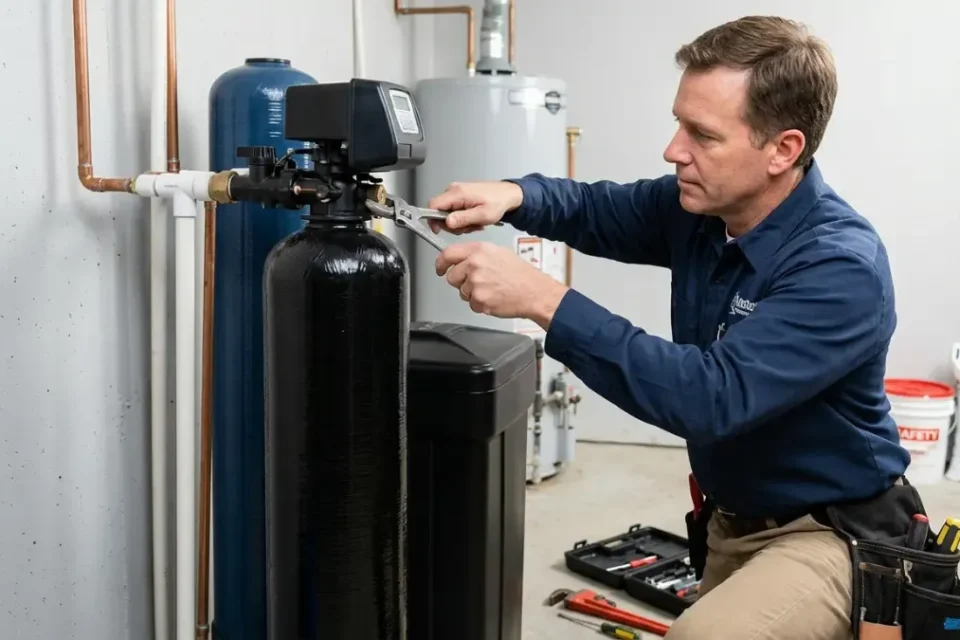
Water treatment equipment usually works quietly in the background. You turn on the faucet, take a shower, wash a load of laundry, and rarely give the system in the basement or utility room a second thought. That’s actually the point. Good water treatment should make life easier, not give you another chore to worry about.
But like any mechanical equipment, a water softener or conditioner can eventually need attention. Maybe scale has started showing up again. Perhaps the system is using more salt than usual, making strange noises, or simply isn’t performing the way it once did. Knowing what those signs mean can save homeowners from unnecessary frustration and, sometimes, a surprisingly large repair bill.
Start by Noticing the Warning Signs
Water treatment problems don’t always announce themselves dramatically. Often, the first clues are small.
You might notice white mineral spots on faucets or glassware. Soap may stop lathering as easily. Your showerhead could develop buildup again, even though the system seemed to be working perfectly a few months earlier.
Other signs can include unusual noises, leaking around connections, changes in water pressure, or an unexpected increase in salt consumption.
None of these automatically means the entire system needs to be replaced. Sometimes, it’s a relatively simple problem that can be corrected with proper inspection.
When Water Softener Repairs Make Sense
If the equipment itself is still in reasonably good condition, Water softener repairs can often be a practical alternative to replacement.
A technician may discover a worn valve, damaged fitting, clogged component, incorrect setting, or another issue affecting normal operation. In some situations, cleaning or replacing one component is enough to get the system back on track.
This is why diagnosing the problem first matters. Replacing an entire system because of one inexpensive component doesn’t make much sense.
On the other hand, if a softener is very old and has experienced repeated failures, repairing it again and again may no longer be economical. That’s when replacement deserves a closer look.
Installation Is More Than Connecting Pipes
When a new conditioner is needed, installation deserves some attention too. It’s tempting to think that the equipment simply needs to be connected to the existing plumbing and switched on.
In reality, proper Water conditioner installation and replacement involves several considerations. The system needs to be appropriately sized for the home’s water usage and hardness level. Connections need to be secure, drainage needs to be handled correctly, and the controls should be configured for the household.
Location matters as well. A system that’s difficult to access can make future maintenance unnecessarily annoying.
Good installation isn’t about making the equipment look impressive. It’s about making sure it works reliably and can be serviced without turning every repair into a major project.
A Water Conditioner Needs Regular Care
Even the best equipment isn’t completely maintenance-free. Filters, valves, tanks, resin, and other components can gradually collect wear or require attention.
Regular Water conditioner maintenance and servicing helps identify problems before they become major failures. Depending on the system, maintenance may include checking settings, inspecting connections, cleaning components, checking performance, and making sure the regeneration cycle is operating properly.
Homeowners should also keep an eye on salt levels if their system uses salt. Running out may seem harmless, but it can prevent the system from properly treating the water.
A few minutes of attention now can sometimes prevent a much more annoying problem later.
Don’t Ignore Changes in Water Quality
One of the easiest ways to notice a treatment problem is simply to pay attention to the water.
If water that used to feel soft suddenly feels different, or mineral deposits begin appearing again, something may have changed. The system could be malfunctioning, the settings may need adjustment, or the incoming water conditions may have changed.
It’s also possible that the treatment equipment was never the cause of the original problem.
That’s why testing can be useful. A water test gives you actual information instead of relying entirely on assumptions.
Repair or Replace? Ask a Few Questions
When a water conditioner stops working properly, homeowners often face the same question: Should I repair it or replace it?
There isn’t one answer for every household.
Start with the age of the equipment. Then consider its repair history, current condition, replacement-part availability, and estimated repair cost.
If the system is relatively young and has otherwise been reliable, repairing it may be the obvious choice. If it’s old, inefficient, and constantly breaking down, replacement could provide better value over time.
Also consider how much water your household uses today. A system that was perfectly sized for a smaller family years ago may no longer be the best fit.
Why Proper Sizing Matters
Water treatment equipment isn’t one-size-fits-all. Household size, water hardness, daily consumption, and peak demand can all affect the appropriate system capacity.
A system that’s too small may struggle to keep up with demand. An oversized system can cost more than necessary and may not operate as efficiently as expected.
This is particularly important when replacing older equipment. Don’t automatically purchase the same size just because that’s what was installed previously.
Your household may have changed. Your water usage may have changed. Even the water source or quality may be different.
What Homeowners Can Check Themselves
There are a few simple things homeowners can inspect without attempting a complicated repair.
Check whether the system has power. Look at the salt level if applicable. Make sure there are no obvious leaks around connections. Listen for unusual noises and pay attention to whether the system is cycling normally.
You can also check when the equipment was last serviced and whether filters are overdue for replacement.
What you shouldn’t do is start taking apart valves, electrical controls, or pressurized plumbing without knowing exactly what you’re doing. A small mistake can turn a manageable problem into a much bigger one.
Good Maintenance Can Extend Equipment Life
Nobody wants to replace a water treatment system sooner than necessary. Regular maintenance can help keep equipment operating properly and may reveal worn components before they cause a complete failure.
It’s similar to maintaining a car. You don’t wait until the engine quits before checking the oil. Water treatment equipment deserves the same basic mindset.
Keep service records, follow manufacturer recommendations, and don’t ignore small changes in performance.
Choose Service Based on the Whole Picture
When professional help is needed, don’t choose a provider based only on the lowest price.
Look for experience, clear communication, proper licensing where applicable, and a willingness to explain what has actually gone wrong. Ask whether the technician recommends repair or replacement and, more importantly, why.
A good service provider shouldn’t make you feel pressured into buying new equipment. You should understand your options and the expected costs before making a decision.
A Little Attention Goes a Long Way
Water conditioners aren’t exciting pieces of household equipment. Most people would rather spend their weekend doing almost anything else than thinking about valves, resin tanks, or regeneration cycles.
Still, these systems play an important role in everyday comfort. When they’re working properly, they help reduce hardness, mineral buildup, and the little annoyances that come with troublesome water.
Pay attention to the warning signs, schedule maintenance when needed, and repair equipment when a repair makes sense. Replace it when replacement is genuinely the better long-term choice.
The goal isn’t simply to keep a machine running. It’s to keep your home’s water performing the way you expect—quietly, reliably, and without becoming another problem on your to-do list.
