Good water treatment is rarely about choosing the biggest system or the one with the longest list of features. It’s about finding the right balance between water quality, household needs, maintenance, and everyday convenience. A filtration system might remove an impressive range of unwanted substances, but if it’s poorly matched to the home, the experience can be disappointing.
For most homeowners, water treatment becomes noticeable in ordinary moments. Filling a glass. Making coffee. Taking a shower. Running the dishwasher. These little routines depend on water that feels clean and reliable, and nobody wants to stand at the kitchen sink wondering whether the equipment is actually doing its job.
That’s why understanding how different treatment technologies work — and how they affect water flow — is worth the effort.
Understanding the Treatment Process
Water filtration and purification aren’t necessarily the same thing. Filtration generally involves removing particles, sediments, chemicals, or other unwanted substances through a physical or chemical process. Purification can involve additional technologies designed to address a broader range of contaminants.
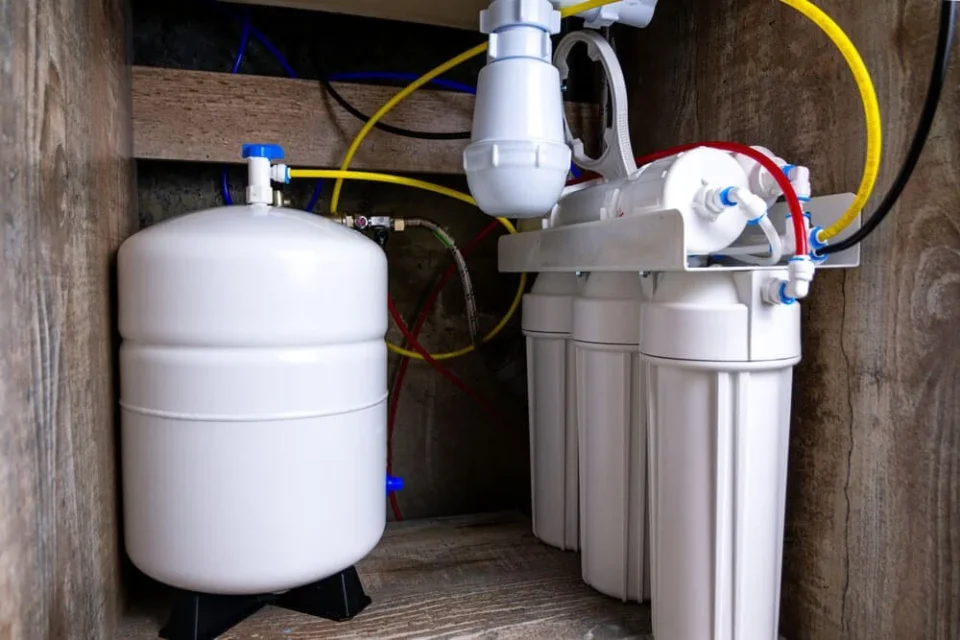
For homes dealing with multiple water-quality concerns, reverse osmosis and water filtration systems can provide different layers of treatment. Filtration may be used before or after reverse osmosis depending on the system design and the quality of the incoming water.
Reverse osmosis uses a semipermeable membrane to reduce many dissolved substances from water. Pre-filtration is often important because sediment and certain contaminants can affect membrane performance. The exact results depend on the equipment, membrane, water chemistry, and operating conditions.
The important point is that treatment should be viewed as a process rather than a single magic component. Each stage has a particular job.
Why Filtration Quality Matters
When people talk about better filtration, they sometimes focus only on how many contaminants a filter can remove. That’s understandable, but it isn’t the whole picture.
Filter capacity, flow rate, pore size, media type, maintenance requirements, and the specific contaminants being targeted all matter. A filter designed to reduce sediment isn’t automatically the right choice for chlorine, dissolved minerals, or microorganisms.
In some applications, superior filtration means selecting several treatment stages that work together rather than relying on one oversized filter. For example, sediment filtration may protect downstream equipment, activated carbon can help address chlorine and certain organic compounds, and reverse osmosis may be used for drinking water where reducing dissolved substances is desirable.
The best setup depends heavily on the source water. A municipal supply may present different challenges from private well water, and even two nearby properties can have different plumbing conditions and treatment needs.
Don’t Forget About Water Pressure
One of the most overlooked parts of water treatment is water pressure. People naturally focus on what the system removes, but they also expect the water to come out of the tap with reasonable force.
Every filtration stage creates some resistance to water flow. As filters become loaded with sediment or other material, that resistance can increase. A system that originally delivered comfortable flow may feel noticeably weaker when maintenance is overdue.
This is why sizing matters. A household with several bathrooms and simultaneous water use has different requirements from a small apartment with one main user. If the treatment equipment isn’t properly sized, the result can be frustrating, particularly during busy mornings when showers, faucets, and appliances are operating at the same time.
Claims about best-in-class water pressure should also be viewed in context. Water pressure isn’t determined by the treatment system alone. Incoming supply pressure, pipe size, elevation, plumbing condition, filter loading, and fixture design can all influence what you experience at the tap.
Testing Comes Before Equipment
Before choosing a system, test the water whenever possible. This sounds obvious, yet it’s an easy step to skip when you’re eager to fix a problem.
Testing can reveal hardness, pH, iron, manganese, chlorine, total dissolved solids, and other characteristics depending on the test performed. For private wells, additional testing may be especially important because water chemistry can change over time.
Once you understand what’s actually present, equipment selection becomes much more logical.
If sediment is the problem, a sediment filter may be appropriate. If chlorine affects taste or odor, activated carbon could be useful. If hardness is causing scale, a softener may make more sense than a standard drinking-water filter. If several dissolved contaminants need to be reduced, reverse osmosis could be considered for an appropriate point-of-use application.
In other words, don’t make the filter do a job it wasn’t designed to do.
Maintenance Is Part of Performance
Even excellent equipment needs maintenance. Filters collect what they’re designed to remove, and eventually they need replacement.
Ignoring this can affect both water quality and flow. A clogged sediment cartridge, for example, can restrict water movement and place additional strain on the system. Carbon filters also have service-life limits, and reverse osmosis membranes require proper care to perform effectively.
A useful habit is to keep a simple maintenance schedule. Write down when cartridges are changed, note unusual changes in taste or pressure, and follow the manufacturer’s recommended service intervals.
It doesn’t have to become a household obsession. Five minutes of attention every so often is usually better than waiting until something stops working.
Point-of-Use or Whole-Home?
Another decision is where treatment should happen.
Whole-home systems treat water as it enters the property, meaning showers, laundry machines, bathroom sinks, and kitchen taps can all receive treated water. Point-of-use systems focus on a particular faucet or appliance, which can be practical when the main concern is drinking and cooking water.
Neither approach is automatically right for everyone.
A homeowner primarily concerned with drinking water may not need extensive treatment throughout the entire property. Someone dealing with hard water, sediment, or other issues affecting plumbing and appliances may have broader needs.
Think about where the problem actually occurs. That’s often the simplest way to narrow the choices.
Looking Beyond the Price Tag
Initial purchase price is important, but it’s only one part of the calculation. Replacement filters, water consumption, electricity, installation, servicing, and expected equipment life can all affect the long-term cost.
A cheaper system that needs frequent replacement may eventually cost more than a higher-quality system with longer-lasting components. On the other hand, paying for advanced technology you don’t need isn’t particularly sensible either.
The goal is not to buy the most sophisticated setup. It’s to buy the appropriate one.
Water Treatment Should Work With Your Routine
At the end of the day, water treatment should make life easier, not add another source of frustration. The best systems are usually the ones that quietly fit into the household routine.
Start by understanding the water. Test it. Identify the actual concerns. Compare treatment technologies based on what they are designed to accomplish, and pay attention to flow requirements as well as filtration performance.
Most importantly, don’t let impressive marketing terms make the decision for you. A system that fits your water chemistry, household demand, plumbing, and maintenance habits will generally make more sense than one chosen simply because it sounds powerful.
Clean, dependable water is an everyday comfort. When the treatment system is properly selected and maintained, you don’t need to think about it every time you turn on the tap. And honestly, that’s probably the best sign that you’ve got the balance right.
